

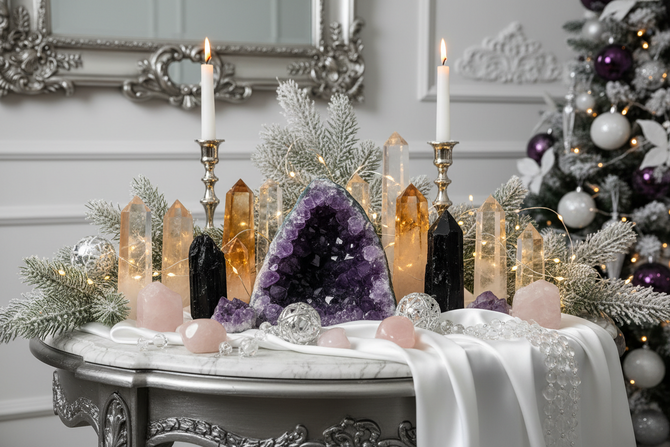

There is something quietly striking about Black Obsidian: a dark, glassy surface that catches the light without losing its depth. In contemporary crystal practice, it is often chosen for Root Chakra work, as a symbol of steadiness, personal boundaries and connection with everyday life. This guide explores those associations and offers gentle ways to make them meaningful in your own practice.
Understanding Chakras & Black Obsidian
Chakra practices draw on South Asian spiritual traditions, with many different interpretations across traditions and modern wellness settings. The familiar seven-chakra framework is a spiritual map for reflection, not a medical system for diagnosing symptoms.
Black Obsidian is volcanic glass rather than a crystalline mineral, although it is commonly grouped with crystals in spiritual practice. Its dark colour and substantial feel make it a popular symbolic companion for grounding. That connection is an interpretation, not evidence that a stone can measure or correct an energy imbalance.
Black Obsidian & the Root Chakra
The Root Chakra, often called Muladhara, is associated with the base of the spine in the seven-chakra framework. Contemporary practices connect it with themes such as:
- Steadiness and connection with the present moment
- Belonging and supportive relationships
- Everyday needs and practical foundations
- Personal boundaries and self-respect
- A sense of connection with the earth
Black Obsidian can serve as a reminder to explore these themes gently. Rather than asking whether your chakra is blocked, consider a practical question: “What would help me feel more supported today?” Your answer might involve rest, a conversation, a manageable task or time outside.
A Simple Root Chakra Reflection
- Choose a comfortable seat with your feet supported. Keep your eyes open if that feels better.
- Place a smooth Black Obsidian stone beside you or hold it loosely. Avoid raw or chipped edges.
- Notice the support beneath your feet and the texture of the stone. Breathe naturally, without holding or forcing your breath.
- Choose an intention such as, “I can take one steady step at a time.”
- Finish by naming one small action that would support your day, then put the stone somewhere secure.
A minute or two is enough. You do not need to feel warmth, tingling or any special sensation for the practice to be personally meaningful.
Black Obsidian for Symbolic Protection
Protection is a common spiritual association for Black Obsidian. A helpful way to approach it is as a reminder of boundaries you can actively practise, such as allowing time before saying yes, limiting an exhausting commitment or asking for help.
A crystal cannot guarantee physical safety, stop another person’s actions or replace practical precautions. Let its symbolism accompany your choices rather than make decisions for you.
Black Obsidian & the Earth Star
Some contemporary energy practices connect Black Obsidian with the Earth Star, described symbolically as an energy centre below the feet. This is an additional concept in certain systems, not one of the seven main chakras and not an anatomical structure.
If that imagery resonates, imagine roots connecting your feet with the ground while you sit comfortably. You can use the same reflection without adopting an Earth Star framework.
Choosing a Shape for Chakra Practice
- Tumbled stones: Compact, smooth pieces for holding during a short reflection.
- Palm stones and hearts: Comfortable shapes to rest in an open hand.
- Spheres: Reflective focal points, displayed in a stable stand.
- Points and carvings: Symbolic accents for a personal altar or shelf.
- Jewellery: A wearable reminder of an intention or boundary.
No shape guarantees a stronger effect. Choose something comfortable and enjoyable to use. For a simple starting point, explore our Black Obsidian Tumbled Stones. Availability of other forms varies.
Combining Black Obsidian with Other Crystals
Combinations can be chosen for personal meaning rather than a fixed energetic formula. Rose Quartz may represent self-kindness alongside honest reflection; Smoky Quartz may echo grounding themes; Clear Quartz can symbolise a clearly expressed intention. You do not need a collection of stones to begin.
Keep Self-Reflection Gentle
Black Obsidian is sometimes described as an intense shadow-work stone. That does not mean you must seek out difficult feelings or expect hidden memories to surface. A crystal cannot verify memories, reveal another person’s intentions or diagnose a health concern.
Stay with ordinary, manageable reflections. If you feel distressed or overwhelmed, stop, look around the room and turn towards something reassuring. Seek support from a trusted person or qualified mental health professional when needed.
Cleansing & Caring for Your Black Obsidian
Use a soft cloth for routine cleaning and follow the individual piece’s care instructions, particularly for jewellery, cords and decorative fittings. Avoid drops, harsh chemicals, saltwater soaking and sudden temperature changes. Chipped obsidian can have very sharp edges, so do not use a damaged piece against your skin.
Sound, moonlight or a quiet moment of intention can form part of a symbolic cleansing ritual without soaking or heating the stone. These rituals do not replace physical cleaning. Do not add obsidian to drinking-water preparations.
Explore the Black Obsidian Series
- For its volcanic origins, spiritual associations, different shapes and general care, read The Ultimate Guide to Black Obsidian: Meaning, Properties & Spiritual Uses.
- For everyday rituals, journalling ideas and home styling, read How to Use Black Obsidian: A Practical Lifestyle Guide.
Final Thoughts
Root Chakra work need not be elaborate. A smooth stone, a comfortable seat and one honest question can create space for a meaningful pause. Let Black Obsidian be a symbol of the steadiness you practise through everyday choices, not a demand to transform yourself overnight.
Disclaimer: Crystals and chakra practices are offered as complementary tools for spiritual reflection and energetic support. They are not a substitute for professional medical or mental health advice, diagnosis or treatment. Please consult a qualified healthcare provider for health concerns.


